
Best AI Video Models in 2026: 5 Compared Side by Side
The best AI video models in 2026 compared: Seedance 2.5, MiniMax H3, Seedance 2.0, Kling 3.0 and Veo 3.1 on clip length, resolution, sound, pros and cons.
 Oraclip Team
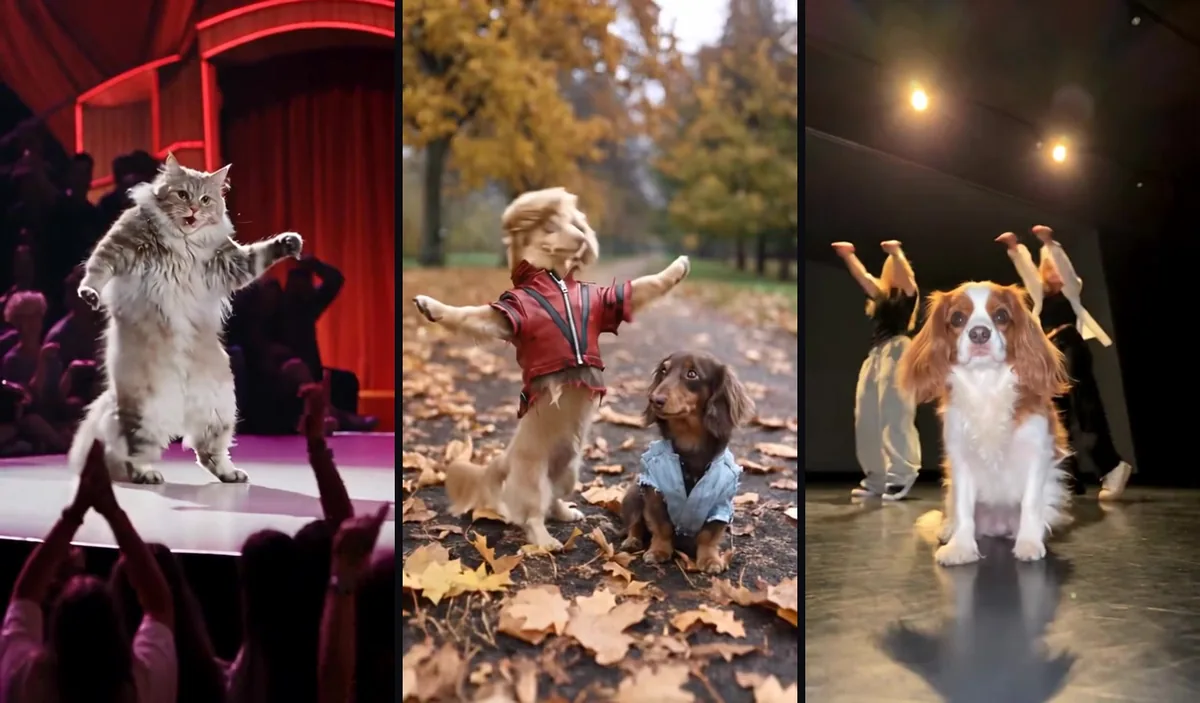
The best AI video models in 2026 are no longer judged on one pretty clip. What matters is how long a single generation runs, which references the model can read (images, video, audio), whether it makes sound, and what each second costs. This guide compares five of the best AI video models on those terms: the three you can use in Oraclip today (MiniMax H3, Seedance 2.5 and Seedance 2.0) and two well-known alternatives (Kling 3.0 and Google Veo 3.1). Every spec below comes from the developer's own announcement or documentation, linked in the sources at the end. Facts were checked on October 22, 2026.
How we compared the best AI video models
Release notes for video models are full of claims that are hard to verify, so this comparison sticks to things you can check yourself:
- Who makes it and when it shipped, from the developer's own post.
- Clip length per generation, the longest single pass without stitching.
- Resolution, as published by the developer, and what Oraclip offers for the models it runs.
- Inputs: text only, a first frame, first and last frames, or a mix of reference images, videos and audio.
- Sound: whether the model generates audio with the picture.
We did not run our own benchmark, and we do not quote leaderboard positions. If a number below is not in the developer's own material, it is not in this article.
The best AI video models at a glance
| Model | Developer, release | Longest clip | Sound | On Oraclip |
|---|---|---|---|---|
| Seedance 2.5 | ByteDance Seed, Jul 31, 2026 | 30 s | Yes | Yes, 4–30 s, 480p or 720p |
| MiniMax H3 | MiniMax, Jul 31, 2026 | 15 s | Yes, stereo | Yes, 5–15 s, 768P or 2K |
| Seedance 2.0 | ByteDance Seed, Feb 12, 2026 | 15 s | Yes | Yes, 4–15 s, up to 1080p |
| Kling 3.0 | Kuaishou, Feb 5, 2026 | 15 s | Yes | No |
| Veo 3.1 | 8 s | Yes | No |
Seedance 2.5: best for long takes and heavy references
ByteDance's Seed team launched Seedance 2.5 on July 31, 2026. Its headline is length: up to 30 seconds of video with audio in one pass, plus extensions. It also reads far more reference material than most models. ByteDance lists up to 30 images, 10 video clips and 10 audio clips in a single request, and it adds timestamp-level editing.
Strengths: the longest single generation in this list, motion transfer from a reference video, character consistency across many reference images, and editing or extending a clip you already have.
Weaknesses: in Oraclip it renders at 480p or 720p, and it costs more credits per second than MiniMax H3. Reference-heavy prompts also take more care to write.
Use it for: AI motion control and dance trends, story clips longer than 15 seconds, and extending a clip you like.
MiniMax H3: best value for text and single-photo clips
MiniMax announced H3 on July 31, 2026 and released the weights on August 3. It is a general multimodal model that makes 4 to 15 seconds of video with native stereo sound at up to 2K. MiniMax says H3 is particularly good at instruction following, text and brand rendering, and video-to-video motion transfer, and that its 2K price per second is less than a third of mainstream models.
Strengths: high resolution for the price, sound included, and open weights if you want to run it yourself.
Weaknesses: 15 seconds at most per clip. In Oraclip it takes text or one starting image, and its soundtrack is always on, so you cannot ask for a silent clip.
Use it for: quick social clips, product shots with on-screen text, and image to video AI from a single photo.

Seedance 2.0: best when you need 1080p
Seedance 2.0 came out on February 12, 2026. It introduced the unified audio-video architecture that 2.5 builds on: text, image, audio and video inputs, up to 9 images, 3 video clips and 3 audio clips as references, and 15-second multi-shot output with two-channel audio.
Strengths: the only model here that Oraclip renders at 1080p, with solid reference support.
Weaknesses: half the clip length of 2.5, and 1080p costs much more per second than 720p.
Use it for: short clips that need a sharper picture, such as ads or a product reveal. The Seedance 2.5 vs 2.0 comparison goes into the differences.
Kling 3.0 and Veo 3.1: strong alternatives outside Oraclip
Kling 3.0 from Kuaishou launched on February 5, 2026. Kling's documentation lists 3 to 15 second clips at 720p, 1080p or 4K, native audio in several languages, and multi-shot generation. It is a strong option for 4K output and dialogue scenes. Oraclip does not run it.
Veo 3.1 from Google makes 4, 6 or 8 second clips at 720p, 1080p or 4K (1080p and 4K only at 8 seconds), with sound always on and up to three reference images. Its clips are shorter, but Google's tooling around it is mature. Google's API docs now point new projects to Gemini Omni Flash, and the Veo 3.1 preview models in the Gemini API shut down on October 22, 2026, so check the current model list before you build on it.
We include both because a fair list of the best AI video models has to mention them. If 4K is a hard requirement, they are worth a look.
Which AI video model should you pick?
- Longer than 15 seconds, or many references: Seedance 2.5.
- Lowest cost per second, sound included, from text or one photo: MiniMax H3.
- 1080p in Oraclip: Seedance 2.0.
- 4K, outside Oraclip: Kling 3.0 or Veo 3.1.
For a closer look at a single model, read the MiniMax H3 guide. If you also need stills, the GPT Image 2 vs Nano Banana 2.1 comparison covers the two image models in Oraclip.
Frequently asked questions
What is the best AI video model right now?
No single model wins everywhere. Seedance 2.5 makes the longest clips and reads the most references. MiniMax H3 gives the most resolution per credit. Kling 3.0 and Veo 3.1 go up to 4K. Choose by clip length, inputs and budget.
Which AI video model makes the longest clips?
Of the models here, Seedance 2.5, at up to 30 seconds in one generation according to ByteDance. In Oraclip you can set any length from 4 to 30 seconds.
Do these AI video models generate sound?
Yes. All five can generate audio with the video. In Oraclip, sound is optional on Seedance 2.5 and 2.0 and always on for MiniMax H3.
Can I use several AI video models in one place?
Yes. In Oraclip you pick MiniMax H3, Seedance 2.5 or Seedance 2.0 in the composer for each generation, and the same chat also makes images with GPT Image 2 or Nano Banana 2.1.
Try the best AI video models in Oraclip
Open the Oraclip AI video generator, choose a model in the composer, and describe your clip or attach a photo. The picker shows the credit cost before you generate, so you can compare models on the same idea.
Sources (checked October 22, 2026): ByteDance Seed: Introducing Seedance 2.5 · ByteDance Seed: Seedance 2.0 official launch · MiniMax: MiniMax H3 · MiniMax: H3 open source · Kuaishou: Kling AI 3.0 launch · Kling API: text to video · Google: Veo 3.1 in the Gemini API